



Two Elizabeths
Posted on Fri 25th September, 2026 by Alexander Reid – Guest Writer
In 1949, that strange entr’acte period between the end of the Second World War and the beginning of England’s second Elizabethan age, times were changing for two women in different parts of London.
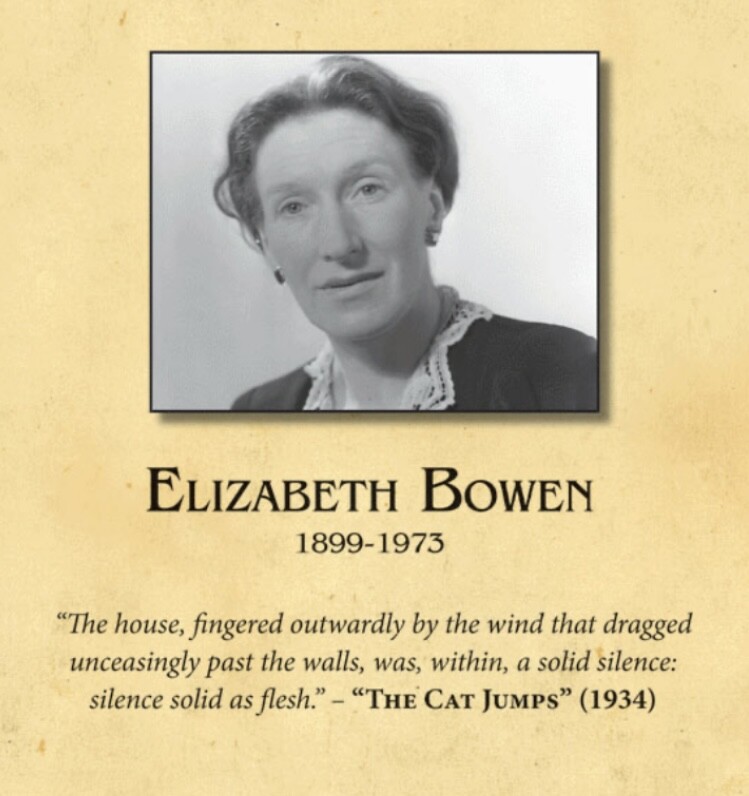
At 2 Clarence Terrace, Regent’s Park, a famous fifty-year-old novelist was at the peak of her professional success, enjoying the acclaim and vast sales of her new book, ‘The Heat of the Day’.
At 24 Halsey Street in Chelsea, a thirty-six-year-old woman, enduring financial troubles and a failing marriage, saw in print her first article in ‘Harper’s Bazaar’, simply entitled ‘Rice Again’.
The first woman was Elizabeth Bowen, the second Elizabeth David.
It is not clear whether they ever met, though they certainly had much in common despite their age difference. They knew the same people, including editors and publishers. Knopf published their books in the United States (Elizabeth David alienated Alfred Knopf by refusing to amend ‘Italian Food’ to suit the needs of American readers, while Elizabeth Bowen was good friends with him and his wife and business partner, Blanche). They were both great writers who also augmented their incomes by writing for newspapers and magazines, often for the same publications, including ‘Vogue’ and ‘House & Garden’. Their literary estates both remain at Curtis Brown today. Both women also had complicated personal lives. Elizabeth David’s marriage eventually ended in divorce; Elizabeth Bowen had a marriage blanc with her husband Alan Cameron and enjoyed several affairs, including one that lasted over three decades, with Canadian diplomat Charles Ritchie, who became Ottawa’s ambassador to Washington and later representative to the Court of St James’s.
Unlike Elizabeth David, who prepared her own meals, Elizabeth Bowen was blessed with servants in her homes in London and County Cork, allowing her time to focus on her writing. In a 1950 autobiographical note for the ‘New York Herald Tribune Book Review’, she wrote of herself: ‘I can cook, but don’t enjoy it – which probably means I am not a good cook.’
However, whether she was a good cook or not, Elizabeth Bowen was certainly gifted when it came to writing of food. Her novels and short stories contain wonderful descriptions of human attitudes and activity during meals. Indeed, her first short story, written in 1920, entitled ‘Breakfast’, documents the almost comic passive aggression a man in a boarding-house suffers from fellow guests when arriving late to his eggs and bacon. Considering her vast collection of batterie de cuisine at home and her work at the shop in Bourne Street, Elizabeth David could well have been interested in Elizabeth Bowen’s article for ‘House & Garden’, ‘The Teakettle’, had she read it, in which the author gave the history of the ‘noble, necessary kettle’ while lamenting the greater interest in the rival teapot. Elizabeth Bowen’s writing of food reached its height in her 1960 travelogue, ‘A Time in Rome’, with her love letter to the Eternal City providing possibly one of the most beautiful descriptions in literature of the simple act of eating an orange:
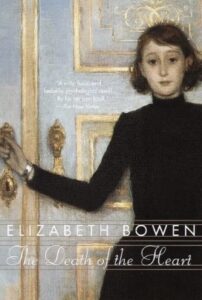
‘A great ripe Sicilian blood orange is in a class by itself: the peel, mottled satin outside, white velvet in, curls away under digs from the thumbs, gladly: the delicate-membraned sections fall asunder like petals, firm flesh not spilling one drop of crimson juice till one bites into them. Such oranges deserve to be eaten as I ate them, in infiltrated sunshine, with wine to finish.’
With the death of her friend Virginia Woolf in 1941, Elizabeth Bowen was arguably Britain’s foremost woman novelist, a position she retained until the 1958 publication of Iris Murdoch’s ‘The Bell’. After the success of ‘The Heat of the Day’, Elizabeth Bowen turned her attention to lecturing in the United States and her journalism. Along with her fiction, she had been writing articles since the late twenties and also served as the book reviewer for ‘Tatler’ magazine, reading several novels a week.
Though primarily writers of books, both women were industrious in their journalism, producing well over a thousand essays, articles and reviews in the 1950s and 1960s. Starting with ‘Harper’s Bazaar’, Elizabeth David wrote for a vast range of publications, including newspapers like the ‘Daily Express’ and the Daily Telegraph’ and magazines such as ‘The Spectator’, ‘Wine & Food’ and ‘Go’. Elizabeth Bowen, who enjoyed an international readership, also produced article after article and on both sides of the Atlantic, even noting that the publications she wrote for were ‘too diverse to enumerate’.
There was a key reason for Elizabeth Bowen’s and Elizabeth David’s journalism: money. In the post-war world, both women suffered from financial troubles as well as currency restrictions. Elizabeth David would write about the challenges she faced in making her money last as long as possible while touring France and Italy in the fifties to undertake the research for her books. Elizabeth Bowen struggled in particular. Increased taxes from the Attlee government were a part of the reason for giving up her house in Regent’s Park and moving to her family home in County Cork, Bowen’s Court, which she did in 1952. Shortly after the move to the Anglo-Irish ‘big house’, her husband died, leaving the management of the country-estate entirely in her hands.
Despite the much-needed fees and wide readership, writing to strict deadlines was not without its costs. A book of the letters and diary entries between 1941-1973 marking their affair, ‘Love’s Civil War’, includes a letter from Bowen to Ritchie in July 1957, in which she complained about the pressures of being a writer and hostess (Bowen’s Court, like any ‘big house’, was a natural magnet for visitors, including the likes of famous writers like Evelyn Waugh, Eudora Welty and Carson McCullers): ‘I have been very busy. A little too much so, rushing to finish that brain-cracking 4,000 word article for USA ‘Holiday’ magazine, plus a number of people in and out of the house… I must get over this neurosis about people POPPING IN.’ Elizabeth David also sometimes struggled to keep up with her professional obligations, which at times allowed her temper to get the better of her. Writing a letter to her friend, photographer Anthony Denney, in 1965, she apologised for a recent outburst, explaining: ‘I’m harassed and tired beyond endurance, and feel trapped like an escaping prisoner, back to bashing out another of those god-awful articles just when I thought I was free…’.
Overwork proved a contributing factor to the breakdowns Elizabeth Bowen and Elizabeth David suffered in 1958 and 1963. Plagued by money worries, Elizabeth Bowen fled to America to write for magazines, failing to respond to letters from concerned friends and relatives or arrange for the payment of bills and servants’ wages. More than half a year passed before she returned to face the inevitable need to sell her family estate. Elizabeth David was brought low by the collapse of her affair with Peter Higgins and the decline in her health from heavy consumption of alcohol and sleeping pills.
Despite the setbacks that drove her to journalism, Elizabeth David’s financial situation improved greatly with the sales of her books (especially after Penguin released them as affordable paperbacks), as well as the contracts with Condé Nast and the ‘Sunday Times’. Elizabeth Bowen’s commissions, on the other hand, were mainly ad hoc requests, and despite her fame, there was no guarantee they would even be published. She even had some articles rejected, and had tried and failed as a ‘Reader’s Digest’ contributor, as she struggled to meet the required style and standard. Elizabeth Bowen also complained about having to write articles on the spot in order to have money while staying in the United States. Such was her need for cash that the author of ‘The House in Paris’ and ‘The Death of the Heart’ at times even wrote articles unworthy of her reputation and talent – a painful example being ‘For the Feminine Shopper’, a guide for Americans for shopping in mid-fifties London.
In the end, it was a losing battle. Bowen’s Court had to be sold, making Elizabeth Bowen, for part of her sixties, functionally homeless.
Along with shared acquaintances, both women had a mutual friend in Ireland, one Derek Hill. The famous portrait and landscape painter, also a friend of reclusive former movie star Greta Garbo, was a longtime resident of Ireland, and notable for being one of the few UK-born to be granted honorary Irish citizenship by the Irish state, which he received from President Mary McAleese in the 1990s.
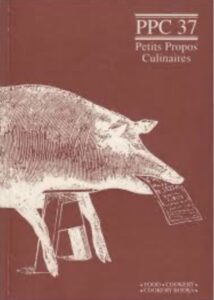
Elizabeth David did well out of her friendship with Derek Hill. Not only was he instrumental in helping her secure the Renato Guttuso illustrations for ‘Italian Food’, but he also invited her many times to stay at his home in County Donegal (usually at Christmas time). She also benefited from those he employed, even writing of Giulia, the Tuscan cook who served Hill in the fifties in Italy, in the 1980 ‘Mafalda, Giovanna, Giulia’ essay published in ‘Petits Propos Culinaires’. At his Irish home, Glebe House, Hill enjoyed the services of a loyal cook-housekeeper, Gracie McDermott, whom Elizabeth David believed to be a truly wonderful cook. According to Artemis Cooper’s ‘Writing at the Kitchen Table’, the great writer was forced to eat her words after declaring that it was not possible to make a good salmon soup, as the cook proved her wrong by producing exactly that.
 Elizabeth David later included Derek Hill and Mc Dermott in the acknowledgements of ‘English Bread and Yeast Cookery’, writing: ‘I am grateful to both of them for taking so much trouble to ensure that my Irish soda bread and Donegal oatcake recipes were given as Gracie has made them all her life in Donegal’.
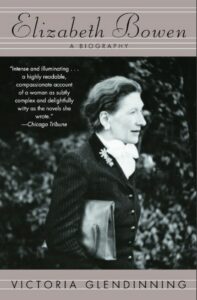
Elizabeth Bowen was a friend of Derek Hill’s and was also a visitor at Glebe House. Sadly, it was Derek Hill who broke the news to her about Bowen’s Court’s fate. According to Victoria Glendinning’s biography ‘Portrait of a Writer’, Elizabeth Bowen, now living in England after a spell teaching about the short story at Vassar College, had commissioned Derek Hill to paint the house after its sale. On a trip to County Cork in 1960, Derek Hill found that his friend, who had sold briskly after accepting the first offer in the mistaken belief the house would be maintained as a residence, had been deceived. The roof had already been removed, and the house was demolished by the end of the year, thereby ending nearly two centuries of Anglo-Irish history. Glendinning notes that Derek Hill was kind enough to paint her former home with the roof intact. Elizabeth Bowen dedicated her 1962 book of essays and literary reviews ‘Afterthought: Pieces about Writing’ to him in thanks.
Freed from the cost of maintaining the now-lost estate, Elizabeth Bowen was able to return to writing novels. She wrote two more, and was even nominated for the Booker Prize and won the James Tait Black Memorial Prize for her last novel, ‘Eva Trout, or Changing Scenes’. She would write articles and reviews from time to time, but her remaining years were dedicated to her fiction as well as a book of autobiographical writings, posthumously published as ‘Pictures and Conversations’ in 1975. With the sale of her archive to the Harry Ransom Center at the University of Texas in the mid-sixties, she was able to buy a house in the town of Hythe in Kent, where she lived the rest of her days before her death in 1973.
In 1981, a detailed bibliography of Elizabeth Bowen’s works was assembled by J’nan M.Sellery and William O. Harris. Despite its thoroughness, it does not include all of her works. So great was her output that forgotten essays, reviews and book introductions published on both sides of the Atlantic are still being unearthed even today. Elizabeth Bowen’s works continue to be published, with collections being edited and published by Professor Allan Hepburn of the McGill University, with the latest appreciation, ‘Elizabeth Bowen in Context’, being published earlier this year.
Elizabeth David at present seems to have no bibliography. Much of her personal library and book collection is based at the Guildhall Library, while her papers and articles can be found across the pond at the Schlesinger Library at the Radcliffe Institute for Advanced Study at Harvard University. Despite the publication of ‘An Omelette and a Glass of Wine’ and the posthumous ‘Is There a Nutmeg in the House?’, it seems the articles sent to the Schlesinger Library were not itemised, unlike Elizabeth Bowen’s collection at the Harry Ransom Center, in which the contents were carefully listed in detail and are available for review today. Even though the best of her journalism was included in ‘An Omelette and a Glass of Wine’ and the posthumous ‘Is There a Nutmeg in the House?’, there remain hundreds of articles and recipes that would be a joy to read. Therefore, effort should be made to list those works that were not collected for later publication.
Elizabeth Bowen deserved her journalism to live on, and the same can certainly be said for Elizabeth David’s. Few would argue otherwise.
Alexander Reid – Guest Writer
Despite working for many years in various administrative roles, Alexander’s career ambition is to become a professional cook.
Although aware of Elizabeth David’s reputation, Alexander only started reading Elizabeth David’s books some six years ago and hasn’t thought of food the same way ever since. In addition to collecting her vegetarian and vegan recipes, as they are not identified as such in her books, Alexander is also conducting a review of Elizabeth David’s early journalism.
