



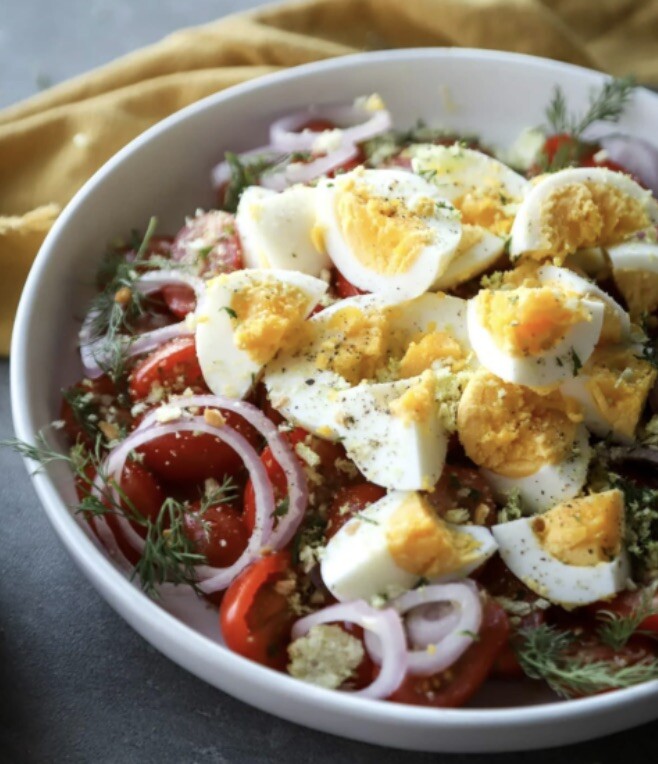
Spoilt For Salad
Posted on Mon 31st August, 2026 by Alexander Reid – Guest Writer
Elizabeth David was not an admirer of her fellow countrymen and women when it came to salads. In fact, she outright condemned them, even writing in her fourth book, ‘Summer Cooking’:
‘How one learns to dread the season for salads in England. What becomes of the hearts of the lettuces?’
She would later demand of her less discerning readers:
‘What is the object of spending so much money on cucumbers, tomatoes, and lettuces because of their valuable vitamins, and then drowning them in vinegar and chemical salad dressings?’
However, there would be one place in Britain that she could enjoy the dish: the Walnut Tree restaurant in Llanddewi Skirrid, Wales, which is still open today. In the draft of a letter in 1980 to its owner, quoted in Artemis Cooper’s 1999 biography of her, ‘Writing at the Kitchen Table’, she wrote of his salad: ‘I ate every scrap of it… and I think perhaps yours is the only restaurant in these islands where I would even order a salad, let alone be able to eat it’.
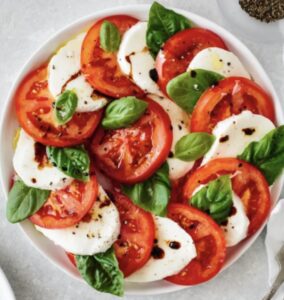
Those who love salads will not find Elizabeth David wanting, as I recently found while noting her vegan and vegetarian recipes out of interest. It should be noted that though they are not identified as such by the author, her books published between 1950 and 1970 introduced a magnificent range of such dishes. It should also be noted that many of the vegetarian salads provided can be made suitable for vegans with the right substitute.
The chapter ‘Cold Foods and Salads’ of ‘A Book of Mediterranean Food’ provided recipes for rice salad; black olives; green olives; dolmades; salad of aubergines; aubergines in a marinade; hummus bi tahina; tahina salad; pan bania (a Provençal sandwich); patafla; a Provençal salad; oignons à la monégasque; a salad of sweet peppers; and leeks à la grecque.
Her second book, ‘French Country Cooking’, offers readers tomates provençales en salade; iced cucumbers; carottes marinées; fennel salad; orange and celery salad; la salade au chapon; les cerneaux aux verjus; tomato salad with cream; and a salad of lettuce hearts with melted butter.
In the introduction to a later edition of ‘Italian Food’, Elizabeth David reminded readers of the importance of regionalism in the country:
‘The term ‘Italian’ used in relation to food would in fact mean very little to most Italians. To them there is Florentine cooking, Venetian cooking, there are the dishes of Genoa, Piedmont, Romagna; of Rome, Naples, and the Abruzzi; of Sardinia and Sicily; of Lombardy, Umbria, and the Adriatic coast. United Italy was created only in 1861, and not only have the provinces retained their own traditions of cookery, but many of their products are localised.’
This is worth bearing in mind when consulting the chapter ‘Hors d’oeuvre and Salads’, as Elizabeth David offers us insalata di funghi (salad of raw mushrooms); insalata di peperoni gialli (salad of yellow peppers); peperoni sott’olio (pimentos in oil); insalata di carciofi (salad of raw artichokes); insalata di patate (potato salad); insalata di pomodoro (tomato salad); insalata di finocchi e radicchie (fennel and radish salad); carciofi alla maionese (artichoke hearts with mayonnaise); uova sode agli spinaci (hard-boiled eggs stuffed with spinach); antipasto misto (mixed antipasto); and insalata di fionocchi e cetrioli (salad of fennel and cucumber).
In ‘Summer Cooking’, you will find hors d’oeuvres of mushroom, cucumbers, and French beans; champignons à la grecque; avocado pears; ratatouille en salade; mushroom salad; spiced rice salad; tomato salad; pimento salad; cucumber sambal; salade espagnole; aubergine chutney; purée of haricots beans; eggs with skordalia; tomatoes with horseradish mayonnaise; globe artichokes; cucumber and chive salad; salad of broad beans, cucumber and oranges; potato salad; laitue crème; lettuce and almond salad; lentil salad; and aubergine purée.
Vegans are spoiled for choice of salads in ‘French Provincial Cooking’, with recipes offered including: concombre en salade (cucumber salad); salade de pommes de terre (potato salad); piments doux en salade (sweet pepper salad); salade de pois chiches (salad of chick peas); topinambours en salade (salad of Jerusalem artichoked); courgettes à la grecque (little marrows stewed in oil); artichauts à la grecque (artichoke hearts stewed in oil); champignons à la grecque (mushrooms stewed in oil); artichauts vinaigrette (globe or leaf artichokes with vinaigrette sauce); cerises à l’aigre-doux (sweet-sour cherries); salade simple, salade de saison (green salad); salade au chapon; salade de pissenlits (dandelion salad); endives en salade (Belgian endive salad); salade de céleris et de betteraves (celery and beetroot salad); salade de riz aux tomates (rice and tomato salad); fonds d’artichauts en salade (salad of artichoke hearts and lettuce). Vegetarians can also enjoy œufs durs mayonnaise (egg mayonnaise); tomates aux œufs durs à la mayonnaise (tomatoes with hard-boiled eggs and mayonnaise); and salade verte à l’angerine (green salad with gruyère cheese).
In the introduction to ‘Spices, Salt and Aromatics in the English Kitchen’, Elizabeth David praises the food she enjoyed while living in Alexandria and Cairo during the Second World War, not least the ‘oniony salads’. She treats her readers to the likes of Munkaczina; coriander mushrooms; sweet pepper and watercress salad; avocado salad; spiced beetroot salad; and cucumber and pepper salad.
Salads were also included in her journalism, with articles such as ‘Summer Greenery’ and ‘Leaf Salads’, both collected in ‘Is There a Nutmeg in the House?’ In the latter, Elizabeth David writes enthusiastically of a visit to northern Italy in 1969 with her sister Diana and her brother-in-law, noting ‘the salads of Venice made such an impact… that we went to the market and bought seeds of all the local salad plants we could find’. Elizabeth David had also written about this trip in the article ‘Bruscandoli’ for ‘Herbal Review’, later included in ‘An Omelette and a Glass of Wine’.
As for her own salads, according to Artemis Cooper’s biography, those lucky enough to be invited to a meal at her home in Halsey Street would often be taken aback by their hostess’s approach:
‘If she served a salad, it was dressed at the table and tossed with her hands. This sometimes caused an involuntary gasp from one or two of the guests, but Elizabeth insisted that this was the only way to ensure that every leaf was properly coated with oil.’
Few in today’s health – and hygiene – conscious world might favour such an approach, even if dining at the table of the great writer herself, but hey, we all have our methods.
Alexander Reid – Guest Writer
Despite working for many years in various administrative roles, Alexander’s career ambition is to become a professional cook.
Although aware of Elizabeth David’s reputation, Alexander only started reading Elizabeth David’s books some six years ago and hasn’t thought of food the same way ever since. In addition to collecting her vegetarian and vegan recipes, as they are not identified as such in her books, Alexander is also conducting a review of Elizabeth David’s early journalism.
