


Elizabeth David and Mrs Woolf Bake Bread
Posted on Fri 2nd October, 2026 by Alexander Reid – Guest Writer
A visitor to the small garden of London’s Guildhall Library in the mid-seventies might well have noticed a piece of string tied to a tree leading to a small pond. Anyone tempted to pull it would have fished a bottle of white wine from the water, where it had been left earlier in the day to chill. If caught, they would have likely received sharp words from none other than Elizabeth David herself, as the wine was part of her lunch after a hard morning’s work.
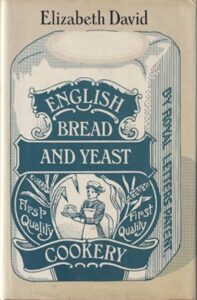
Writing is a solitary affair, and we often only know details of a book’s creation from what its writers are willing to tell us or what biographers can find out. Both Lisa Chaney and Artemis Cooper’s biographies provide such anecdotes as this, as she was much observed in the researching of her seventh book, ‘English Bread and Yeast Cookery’, which would be published to acclaim in 1977. We learn of the trips across England, Wales and France, visiting mills and bakeries as well as museums and libraries in her quest to learn as much about flour-based cookery as possible. Though mainly, not entirely, interested in bread, she would also learn about the making of cakes, oatcakes, pizza, among other baked treats. On a visit to Leicester, she even took over the office of an absent museum director without permission, and, to the surprise of her diligent research assistant, started reading through his papers!
In the book’s acknowledgements, she writes of a visit to East Sussex to interview Louie Mayer, a former cook and housekeeper who had been taught to make bread by none other than Virginia Woolf herself. (The trip was also memorable as, on passing Croydon while travelling, she would notice a bakery advertising ‘oven fresh bread’ only to find on closer observation that its promoted fare was little more than ‘wrapped, sliced loaves’ from the local factory!).
She had linked food to literature in her early works, most notably in her first book. Part of the great appeal of ‘A Book of Mediterranean Food’ was her weaving recipes for wonderful dishes, many unknown in Britain at the time of publication, between quotations from the likes of Lawrence Durrell, Gertrude Stein, D. H. Lawrence, and Henry James. ‘English Bread and Yeast Cookery’ is no stranger to this approach, with its author even going further by also including contemporary comment from newspapers (a 1974 cartoon of a housewife saying she substituted sliced bathroom sponge for bread without anyone noticing and a man writing nostalgically of Staffordshire oatcakes and their sad non-existence outside his county being good examples). Mrs Mayer’s reflections on her former employer, published in 1972, ‘Recollections of Virginia Woolf’, edited by Joan Russell Noble, also grace the pages. Mayer had earlier spoken of life with the Woolfs as well as the day of her mistress’s suicide for the BBC documentary, ‘A Night’s Darkness, A Day’s Sail’, broadcast in 1970.
According to Mayer, ‘there was one thing in the kitchen that Mrs Woolf was very good at doing: she could make beautiful bread. The first thing she asked me when I went to Monks House was if I knew how to make it. I told her that I had made some for my family, but I was not expert at it. “I will come into the kitchen, Louie”, she said “and show you how to do it. We have always made our own bread.”’
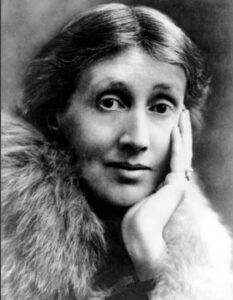
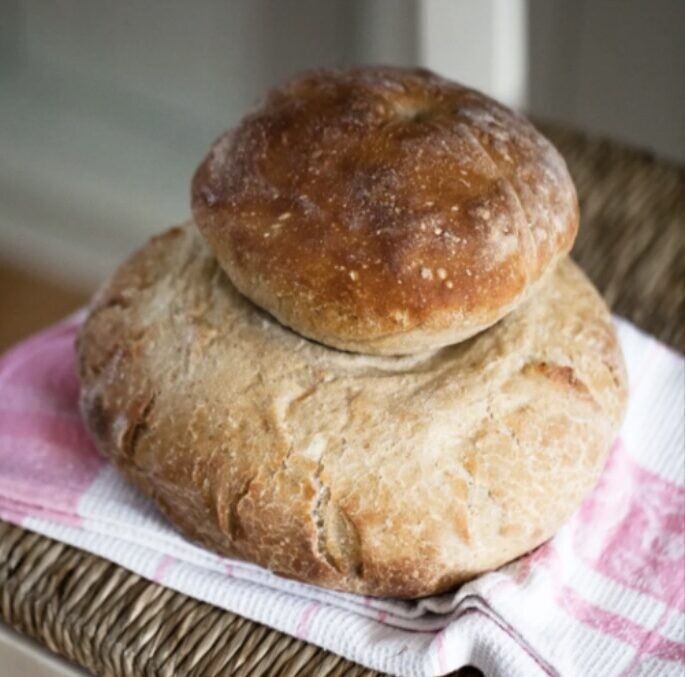
The writer would then demonstrate ‘how to make the dough with the right quantities of yeast and flour, and then how to knead it. She returned three or four times during the morning to knead it again. Finally, she made the dough into the shape of a cottage loaf and baked it at just the right temperature.’
It would not be long before breadmaking became somewhat competitive, as Mayer concludes: ‘It took me many weeks to be as good as Mrs Woolf at making bread, but I went to great lengths practising and in the end, I think, I beat her at it.’”
It is an interesting story, for it not only provides a different side of the celebrated novelist, who was well-known for not having the easiest of relationships with the people who worked for her and her husband Leonard. In the 2007 publication ‘Mrs. Woolf and the Servants: An Intimate History of Domestic Life in Bloomsbury’, Alison Light covers extensively the lives of the women in her service, including Nellie Boxall, her cook of nearly two decades. Boxall would be dismissed from her post in the thirties following too many rows, only to go on to work for a well-known acting couple, the Oscar-winner Charles Laughton and Elsa Lanchester, of ‘Frankenstein’ fame. Woolf’s staff troubles even appeared on the silver screen. One of the more memorable scenes of the 2002 movie ‘The Hours’, which includes a fictional day in the life of the great novelist, was her engaged in an ‘upstairs, downstairs’ battle of wills on a visit to the kitchen. Portrayed by Nicole Kidman in an Oscar-winning turn, Mrs Woolf fails to provide morning instructions, ducking out to write the first pages of what would be ‘Mrs Dalloway’, which subsequently leads to domestic disharmony. Without direction, she finds the cook bitterly complaining about her to a fellow servant and preparing her own choice of a lamb pie for lunch, to her employer’s ‘that seems suitable’ dissatisfaction. She increases Boxall’s wrath by instructing her to travel from Richmond to central London for the purpose of buying ginger ahead of an afternoon visit from her sister, increasing the tension but ultimately regaining the upper hand as mistress by doing so.
Writing in 2026, the year between the publication centenaries of her most celebrated novels, ‘Mrs Dalloway’ and ‘To the Lighthouse’, Woolf’s fame and reputation in a world of ever-changing tastes and interests show no sign of abating. At home and abroad, she remains at the forefront of English literature, and, along with Agatha Christie and J.K. Rowling, is arguably the most famous British female novelist of the last century. Even to those who have never read her works and know nothing of her life, her name is known.
Travelling back to the seventies, given the vast information at her fingertips from her research, it was right for David to include Woolf’s attitude and gift for breadmaking, for not only does it provide a different, non-literary aspect of the writer’s life, but it also reminds us that in the first half of the century, the making of bread could have as much interest above stairs as it was below, something many might have thought otherwise.
Alexander Reid – Guest Writer
Despite working for many years in various administrative roles, Alexander’s career ambition is to become a professional cook.
Although aware of Elizabeth David’s reputation, Alexander only started reading Elizabeth David’s books some six years ago and hasn’t thought of food the same way ever since. In addition to collecting her vegetarian and vegan recipes, as they are not identified as such in her books, Alexander is also conducting a review of Elizabeth David’s early journalism.
