


Cairo Days
Posted on Sat 7th November, 2026 by Alexander Reid – Guest Writer
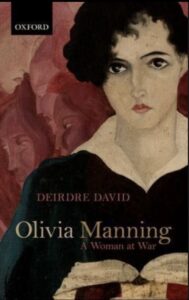
In the late autumn of 1987, the BBC aired a new series called ‘Fortunes of War’, an adaptation of Olivia Manning’s famous Balkan and Levant trilogies. Seven episodes chronicling the wartime adventures of Guy and Harriet Pringle, a young lecturer and his wife living in Romania and Greece before escaping to Egypt, eventually ending up in Cairo.
At home in Chelsea, Elizabeth David, who was not a great television watcher at the best of times, decided to tune in on this occasion. She had known Manning in the 1940s, when they were both living in the Egyptian capital, waiting for the war to end while the Allied and Axis warriors fought to the death in the desert.
The series was a success, and soon turbocharged the careers of the actors playing the Pringles. Within a few years, Kenneth Branagh would be nominated for an Oscar for his portrayal of Shakespeare’s Henry V while his then-wife Emma Thompson would later take home the gold for ‘Howards End’, making her the first British woman to win the Best Actress Award since Glenda Jackson’s double victory in the 1970s.
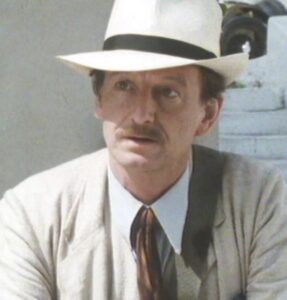
‘Something of me is in those books,’ David reportedly remarked a few years after the show aired, thinking of Manning’s six novels published between 1960 and 1980. But while watching the events on screen, it was not Thompson’s sad, resigned Harriet Pringle who must have caught her eye: rather Edwina Little, the young woman working at the Embassy who, on failing to land the Anglo-Irish aristocrat of her dreams (not realising he was already attached), opts for a loveless marriage to a previously married officer. Musing sadly, Edwina (played by actress Diana Hardcastle, who later became a resident of the popular ‘Best Exotic Marigold Hotel’), sighs, ‘If you can’t marry the man you want to marry, does it matter who you marry?’ Making up her mind, she snaps, ‘Oh, damn it, I think I will marry Tony Brody!’ On her wedding day, on being wished a ‘long and happy marriage’, she responds with a ‘not likely’ smile, ‘It’s a possibility’.
The young woman from Sussex, new to Egypt, would soon meet her own Tony Brody, a Lieutenant-Colonel called Anthony David (also called Tony for short), but that would be a few years later.
Biographer Artemis Cooper, also the author of ‘Cairo in the War: 1939-45’, informs us of her subject’s first impressions of Egypt. Arriving in May 1941, she saw that ‘the great port of Alexandria was filled with warships and other vessels damaged in the evacuation of Crete. The quayside, where the refugees disembarked, was piled high with crates. Milling around them were dusty trucks, gangs of Egyptian dockworkers in their faded blue and white gallabeias, and everywhere, soldiers in khaki. The bright red caps of the military policemen blazed out of the mass. The smell of dust and petrol hung heavy, yet from almost anywhere in Alexandria, there was a glimpse of the sea.’
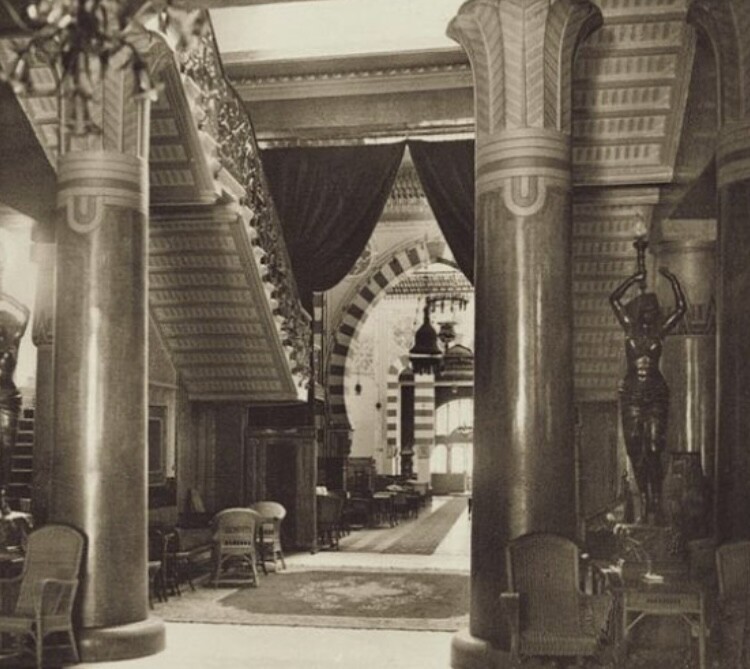
Not long after her own escape from Greece, Elizabeth Gwynne, as she was then known, parted ways with her former lover, Charles Gibson Cowan, with whom she had sailed around the Mediterranean, and shed her refugee status by joining the workforce. She first secured a position at a naval cipher office in Alexandria and later ran a reference library for the Cairo-based British Ministry of Information. Though trapped between desert warfare and the deep blue sea, David was far from down. There was too much to do, not to mention the vast number of Britons in the capital, residing in Garden City flats by the Nile, enjoying tea and cakes at the famous Groppi’s café or passing the time in clubs or at the grand Shepheard Hotel. Noting with some amusement, she wrote: ‘Hardly a day passes when I don’t run into some old friend or relation from England – I am now so used to being clapped on the back and greeted with the words “Hello Liz, I thought you were in an Italian prison camp,” that I have ceased to be surprised’.
Though her time in Alexandria and Cairo was a few years, David benefited greatly from her life in those two cities. Not only did she enjoy the independence of being a working woman, but her knowledge of food increased considerably as she watched the great cooks who worked for her, Kyriacou and Suleiman, in action. The Greek refugee and former sponge diver performed culinary wonders, conjuring for her a fine octopus stew laced with herbs and cooked in wine sauce. Then with Suleiman, she would be treated to a diet of ‘rough but highly flavoured colourful shining vegetable dishes, lentil or fresh tomato soups, delicious spiced pilaffs, lamb kebabs grilled over charcoal, salads with cool mint-flavoured yoghurt dressings, the Egyptian fellahin dish of black beans with olive oil and lemon and hard-boiled eggs…’ The Sudanese cook’s lamb pilaf was included in his former employer’s ‘A Book of Mediterranean Food’ and enjoyed much imitation in later years. When publisher John Lehmann suggested the title of her first book should be ‘The Blue Train Cookery Book’, referring to the luxury sleeper connecting rich passengers from Calais to the French Riviera, she refused, reminding him the service had not travelled as far as Alexandria and Cairo. Living in Egypt provided her first book with an authority that would have been somewhat lacking had she only lived on the European side of the Mediterranean.
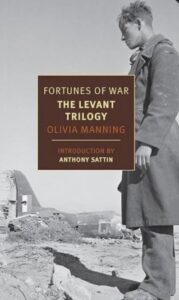
Despite various trials and tribulations, Manning also profited from her time in Egypt, and she would enjoy an abundance of material for her later novels. Just as she was skilled at crafting war scenes or putting male psychology into words (indeed, a reader encounters nearly every type of man in the trilogies!), Manning, who, when reviewing ‘Italian Food’ for the ‘Jerusalem Post’, identified her fellow former refugee’s middle-class readers as the ‘New Poor’, as they existed without the services of cooks and housekeepers enjoyed by previous generations, was particularly gifted when writing of food. A good example is in the closing chapters of ‘The Danger Tree’, the first book in ‘The Levant Trilogy’, the occupants of the Garden City flat (the Pringles, Edwina and Dobson, the diplomat) consume mangoes from the tree in the garden:
‘… Let’s give up that damned tree. I hate the sight of it staring at me through the window.’
‘You can say that,’ said Harriet, ‘when you’re in the very act of eating mangoes?’
Dobson, smiling slyly, said, ‘Still, Guy may be right. His could be an instinctive dislike. People here call the mango “The Danger Tree”. You know that in England someone dies every year from eating duck eggs? – Well, in countries where a lot of mangoes are eaten, someone dies from mango poisoning every year.’
Edwina, who had been putting out her hand for another mango, withdrew it, saying, ‘Dobbie, how could you! What a horrid joke!’
‘It’s not a joke. The stems are poisonous and sometimes the poison seeps into the fruit. It doesn’t happen often but people are killed by it.’
Harriet joined in Edwina’s indignation. ‘You’re an awful liar, Dobbie. If it were true, you would have told us straightaway.’
‘Ha!’ Dobson smiled. ‘Had I told you straight away, you would have said, “That greedy fellow wants to keep his mangoes to himself.”’
Scenes of nourishment (or the lack of it), written at times with near menace, allowed Manning to toy with her cast of characters, reminding them they were cut off from home and therefore very much abroad. Arriving in Bucharest and trying to find the British Legation on foot, Prince Yakimov stops and stares at a man greedily consuming a bowl of onion soup topped with a ‘pollen of cheese and broken toast’. Blinis and the next free drink forever on the mind, the penniless aristocrat of Russian and Irish parentage deteriorates in body and soul when deprived of the rich food known in previous years. In Greece, while volunteering in a British army café, nearly fainting from hunger, Harriet Pringle is presented with a leg of Canterbury lamb as a gift from the soldiers, only to be forced to surrender the meat to another expatriate, out of good manners and her own lack of cooking facilities. Mrs Brett, the lucky recipient, uses cozy get-togethers over tea in her hotel room as a means of asserting her superiority while trashing her enemies. When the Pringles flee the invasion of Greece, their culinary introduction to Egypt proves to be plates of river fish tasting of mud. After he is injured by a bomb, Lady Angela Hooper and her husband desperately try to feed their son through a hole in his cheek with a spoon of gruel, not realising the boy is already dead. And in the closing pages of the last book of the second trilogy, ‘The Sum of Things’, Mrs Edwina Brody’s wedding breakfast of ‘cold meats and a cake from Groppi’s, five rented champagne buckets and three cases of champagne’ is brought to a standstill by Harriet’s ‘return’ from the dead, resulting in gasping guests and a wailing husband.
Yes, Manning certainly knew how to use food in her fiction.
Both women, born under king-emperors (Manning, Edward VII, and David, George V,) and raised, like nearly everyone else on the sceptered isle at the time, to believe in the Empire, must have known that the world they saw in Alexandria and Cairo, the last flourishing of British presence, could not last forever. And indeed it didn’t. January 1952 would see rioting and the mainstays of Cairo’s expatriate community go up in flames, including Shepheard Hotel. While surviving the resulting revolution, which saw King Farouk’s abdication and the transition to a republic, the capital’s Anglican All Saints’ Cathedral, where the English worshipped, would be demolished two decades later to make way for the new 6 October Bridge. David herself would see the dying days of imperialism in two nations, as she moved from Egypt to India, living briefly (and unhappily) with her new husband in the Raj’s last hurrah before her return to ration-hit post-war England. And then finally, in 1956, the year contracts with ‘The Sunday Times’ and Condé Nast cemented her position as the United Kingdom’s premier food writer, came the Suez Crisis and the end of the line for John Bull’s seven-decade occupation of the Land of the Pharaohs.
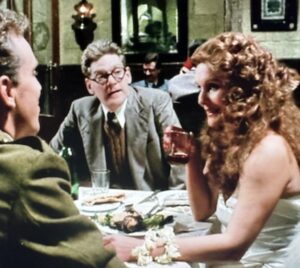
Back in 1987, watching the show reach its conclusion (with the Pringles reflecting on the future of their marriage while seated at the top of a pyramid), it is possible that nostalgia (in some form) may have taken hold of the occupant of 24 Halsey Street. The late 1980s were a different world entirely to the one she had known in the 1940s. Many of her contemporaries were now dead, including Manning, who had passed away in 1980. With persistent health problems, she herself was entering her final years, though she would rightly not want to dwell on such matters. Seeing Tony Brody woo Edwina Little in a red-light district fish restaurant after Guy Pringle forgets about her, a thought may have gone to the man she had married and divorced, now two decades deceased. A failed marriage, yes, and yet it is worth remembering that had her union with Tony David been successful, instead of a disaster plagued by debt and disinterest, it is likely the great works we enjoy might have never seen the light of day.
Unlike David, Manning failed to achieve the fame she craved in her lifetime (the Booker Prize and bestsellerdom repeatedly eluded her), but just like ‘A Book of Mediterranean Food’, also conjured from accumulated memories, the Balkan and Levant trilogies today are as fresh and relevant as ever, while many of the acclaimed efforts of her more successful contemporaries have aged and faded away. Triumphs born from chaos, these works, as the centenary of the Second World War grows closer, remain very much alive and here to stay.
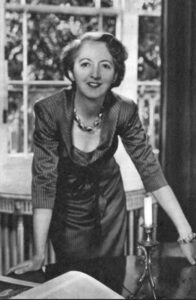
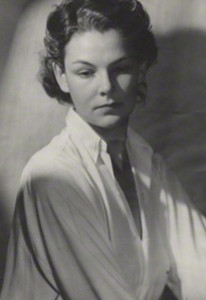
Alexander Reid – Guest Writer
Despite working for many years in various administrative roles, Alexander’s career ambition is to become a professional cook.
Although aware of Elizabeth David’s reputation, Alexander only started reading Elizabeth David’s books some six years ago and hasn’t thought of food the same way ever since. In addition to collecting her vegetarian and vegan recipes, as they are not identified as such in her books, Alexander is also conducting a review of Elizabeth David’s early journalism.
